


A $5 jacket at a thrift store. The same jacket sells for $45 on eBay. That $40 gap — minus fees and shipping — is reselling for profit in a nutshell, and it is one of the lowest-cost ways to make money online for beginners. You do not need a warehouse, a brand, or a big budget. You need a phone, $20–$50 to start, and the patience to check what things actually sell for before you buy them.
Reselling — often called flipping — means buying undervalued items and selling them for more on platforms like eBay, Facebook Marketplace, Poshmark, and Depop. Thrift stores, garage sales, clearance racks, and even other people’s unwanted furniture are your suppliers. This guide walks you through the whole process: what to sell, where to find it, how to price it, and the mistakes that eat beginners’ profits.
What Is Reselling (and Why It Works in 2026)
Reselling works because pricing is inefficient. A charity shop prices a donated designer jacket at $5 because it needs the shelf space, not because the jacket is worth $5. A family clearing out a house sells a games console for $40 because they want it gone by Sunday. Your job is to spot the gap between what an item costs where you found it and what a buyer will pay for it somewhere else.
The market behind it is enormous. ThredUp’s 2025 Resale Report expects the global secondhand apparel market to reach $367 billion by 2029, and buyers are increasingly comfortable purchasing used goods online. Marketplaces have done the hard part for you: eBay, Facebook Marketplace, and Poshmark put your listing in front of millions of buyers, handle payments, and in some cases even provide shipping labels. You supply the eye for value and the legwork.
It is also honest work with honest limits. Reselling pays for your time and knowledge, not for magic. A casual reseller spending a few hours a week might make $100–$300 a month. Someone treating it like a part-time job — sourcing two or three times a week, listing consistently — can realistically reach $500–$2,000 a month. The sellers posting five-figure months usually have years of category knowledge, storage space, and systems. Start with the first two tiers and let the third earn itself.
How Much Money Can You Actually Make?
Earnings depend on three things: what you sell, how fast it turns over, and how much of the sale price survives fees and shipping. A $50 sale is not $50 of profit. Here is what the maths looks like at three levels of effort.
| Level | Time per week | Typical monthly sales | Realistic monthly profit |
|---|---|---|---|
| Casual — selling things you already own | 2–3 hours | $100–$300 | $80–$250 |
| Part-time — regular thrift and marketplace sourcing | 8–12 hours | $800–$2,500 | $400–$1,200 |
| Serious — a niche you know deeply, daily listing | 20+ hours | $3,000–$8,000 | $1,500–$3,500 |
Those profit figures assume a typical gross margin of 40–60% after platform fees and shipping — the range most experienced resellers work within. Margins vary wildly by category: a vintage T-shirt bought for $3 and sold for $40 is a huge margin, while a games console bought for $180 and sold for $240 is a thin one. The table is a planning guide, not a promise. If reselling is one of several earning ideas you are weighing, the honest comparison is profit per hour, not revenue per month.
The 10 Best Items to Flip for Profit
The best items to flip share four traits: you can look up their sold prices, you can check their condition in a minute, they ship without eating the margin, and buyers search for them every week. These ten pass that test most reliably.
| Item | Typical buy price | Typical resale price | Best place to sell |
|---|---|---|---|
| Smartphones (used, unlocked) | $50–$400 | $100–$600 | eBay, Swappa |
| Game consoles and controllers | $10–$100 | $120–$200+ | eBay, Facebook Marketplace |
| Power tools and batteries | $5–$20 | $45–$90 | eBay, Facebook Marketplace |
| Sneakers (popular models) | $10–$60 | $50–$500+ | eBay, StockX, GOAT |
| Vintage and branded clothing | $5–$20 | $23–$300+ | eBay, Depop, Poshmark |
| LEGO sets (especially retired ones) | $10–$100+ | $20–$300+ | eBay, BrickLink |
| Laptops and tablets | $50–$400 | $100–$600+ | eBay, Swappa |
| Furniture | $20–$100 | $80–$1,000+ | Facebook Marketplace |
| Small appliances | $5–$60 | $25–$300 | eBay, Facebook Marketplace |
| Video games (with case and manual) | $2–$10 | $20–$100+ | eBay, Facebook Marketplace |
Price ranges are typical figures reported by reselling guides in 2026; exact values depend on brand, model, condition, and your local market. Two categories deserve a special note. First, clothing: brand-name and vintage pieces (think Patagonia, Carhartt, Levi’s 501s, pre-2000 band T-shirts) are the most reliable thrift flips because charity shops often price them without checking the brand. Second, electronics: the margins are real, but so is the risk — always test a device before you buy it, and never buy a phone you cannot verify is unlocked and not reported lost or stolen.
Pick one or two categories and learn them deeply rather than flipping a bit of everything. A reseller who knows every model of DeWalt drill and its used price will beat a generalist every time, because spotting a bargain in seconds is what turns a thrift trip profitable.
Where to Find Items to Flip
Sourcing is the skill that separates profitable resellers from people with a garage full of unsold stock. The rule is simple: buy where sellers price to clear, not where they price to maximise.
| Source | What it is good for | Watch out for |
|---|---|---|
| Thrift and charity shops | Clothing, books, kitchenware, small electronics | Overpriced “boutique” sections; check sold prices first |
| Garage and yard sales | Almost anything, often cheapest of all | Early birds take the best stock — go early |
| Facebook Marketplace and Craigslist | Furniture, electronics, appliances | Sellers who price to sell fast — set alerts for your niche |
| Estate and house-clearance sales | Vintage items, collectibles, furniture | Prices drop sharply on the last day |
| Retail clearance racks | New-with-tags clothing, toys, small appliances | Only buy what already has proven resale demand |
| Your own home | Your first listings — zero cost, zero risk | Sentimental pricing: check sold prices, not your memories |
Start with your own home. Most people have $200–$500 of sellable items sitting in cupboards — old phones, games, clothes with tags still on. Listing those first teaches you photography, pricing, and shipping with nothing at stake, and the money becomes your sourcing budget. It is the lowest-risk way to learn whether you enjoy the work before spending a cent.
How to Check If an Item Will Sell Before You Buy It
This is the single most important habit in reselling, and it takes about thirty seconds on your phone. Never buy an item on a guess.
Step 1: Check eBay sold listings
Open the eBay app, search for the exact item — brand, model, and size — then filter by “Sold Items”. This shows what people actually paid over the last 90 days, not what sellers are hoping to get. Listed prices lie; sold prices tell the truth. If you see several recent sales at three to five times the price on the tag in front of you, it is worth buying.
Step 2: Check the sell-through rate
A high sold price means nothing if almost nobody buys. Sell-through rate is the share of listings for an item that actually sold in a given period. As a rough guide: above 60% is healthy, 40–60% is workable if your margin is fat, and below 40% means only buy at a steep discount. eBay’s free Terapeak research tool (included with a seller account) shows sell-through data; several phone apps can scan a barcode and show it in-store.
Step 3: Do the profit maths on the spot
Profit = sale price − buy price − platform fee − shipping − packaging. If that number is under $10 after everything, leave the item unless it will sell in days. Your phone is your best tool here — a quick check on the shop floor saves you from a shelf of stock that never moves. If you are the kind of person who likes researching from your phone, you may already have the habit that makes make money with your phone methods work; reselling rewards exactly the same skill.
Where to Sell: Marketplace vs eBay vs the Rest
Each platform takes a different cut and reaches a different buyer. Match the item to the platform, not the other way round.
| Platform | Best for | Seller fees (2026, US rates) |
|---|---|---|
| eBay | Almost anything, especially electronics, collectibles, and anything you will ship | ~13.6% of the total sale in most categories, plus $0.30–$0.40 per order; 250 free listings a month |
| Facebook Marketplace | Furniture and bulky items, local sales | Free for local pickup paid in person; shipped orders ~10% (minimum $0.80) |
| Poshmark | Branded and vintage clothing | 20% on sales of $15 and over; flat $2.95 under $15 |
| Depop | Vintage and streetwear, younger buyers | 10% of the item price plus payment processing |
| Mercari | General secondhand, low-effort listing | No listing fee; check current selling fee before pricing |
| StockX / GOAT | Authenticated sneakers and streetwear | ~9–10% commission plus processing fees |
Two fee details catch beginners out. First, eBay’s percentage applies to the whole sale — item price plus the shipping the buyer pays plus sales tax — not just the item price. On a $50 sale that can mean roughly $7 in fees rather than the $6.80 a quick estimate suggests. Second, Facebook Marketplace is free only for local pickup: the moment a buyer pays through Marketplace checkout for a shipped item, the fee applies. Rates change — Meta has moved its shipped fee before — so verify the current rate on the platform’s own fee page before you build your pricing around it. Outside the US the picture differs again: in the UK, for example, private eBay sellers currently pay no final value fee, which changes the maths completely.
Unlike print on demand, where nothing is made until a customer orders, reselling means you hold physical stock. That is both the risk and the advantage: your money is tied up in inventory, but you control the price, the photos, and the speed of sale.
How to Price Your Items for Profit
Good pricing is arithmetic, not instinct. Work from the sold price backwards:
Sale price − buy price − platform fee − shipping − packaging = your profit.
A worked example: you buy a vintage Pyrex dish for $6 at a thrift store. Similar dishes recently sold on eBay for $40, and the buyer pays $10 shipping. eBay takes about 13.6% of the $50 total plus $0.40 — roughly $7.20 — and the shipping label costs you $10. Your profit is $40 − $6 − $7.20 − $10 = about $16.80 on a $6 outlay. That is a good flip. If the same dish had sold for $20, the profit would be near zero after fees, and it would not be worth listing.
Three pricing rules that keep beginners profitable:
- The 3x rule: aim to sell for at least three times what you paid. That leaves room for fees, shipping, and the occasional return without wiping out the profit.
- Price from sold listings, not listed prices: active listings show what sellers hope for; sold listings show what buyers pay. Price at or just below the average sold price for a fast sale, or at the high end if the item is rare and you can wait.
- Leave room to negotiate: on Facebook Marketplace, list 20–30% above the lowest price you will accept. Most buyers expect to haggle, and a small discount feels like a win for both sides.
How to Write Listings That Sell
Buyers cannot hold your item, so your photos and title do the selling. This is where most beginners lose money they never see — a great item with bad photos sells slowly or not at all.
- Photos first: shoot in daylight, against a plain background, from every angle. Include close-ups of labels, model numbers, and any flaws. Honest flaw photos build trust and prevent returns.
- Titles with keywords buyers search: brand + model + size + colour + condition. “Nike Air Max 90 Men’s UK 9 White — Very Good Condition” beats “nice trainers” every time.
- Measurements for clothing: buyers cannot try it on. Chest, length, and waist measurements in the description cut returns dramatically.
- State the condition plainly: “tested and working”, “light wear on the soles”, “small scratch on the back, shown in photo 4”. Vague listings attract vague buyers and disputes.
- Answer fast: on Facebook Marketplace especially, the first seller to reply usually gets the sale. Turn on notifications and answer within the hour when you can.
Shipping Without Losing Money
Shipping is where thin margins die. A few habits keep it under control: weigh the item packed before you list it, not after it sells; use the platform’s shipping calculator or a postal scale so the buyer-paid shipping covers the real cost; keep a stock of boxes, polymailers, and padding so you are not buying retail packaging per order; and for eBay, consider free shipping only when the item’s price comfortably absorbs it — on a $15 item, a $7 label is nearly half the sale.
For bulky items, local pickup is your friend. Furniture, exercise equipment, and large appliances sell best on Facebook Marketplace precisely because no one has to ship them. Price them for a quick local sale rather than a slow national one.
7 Beginner Mistakes to Avoid
- Buying without checking sold prices. The number-one profit killer. Thirty seconds on the eBay app would have saved the purchase.
- Ignoring fees in the maths. A 13.6% fee plus shipping turns a “great” $15 profit into $4. Always subtract fees before you buy.
- Buying fakes or stolen goods. Counterfeit sneakers and handbags get your account restricted; goods with no provenance can be reported stolen. If a deal looks too good, verify the item.
- Overpaying for slow stock. A $100 item that takes six months to sell ties up money that could have flipped five times. Turnover beats margin.
- Skipping the test. Electronics that “probably work” usually do not. Test everything, or price it honestly as “for parts”.
- Bad photos. Dark, blurry, single-angle photos are the difference between selling in a day and relisting for a month.
- No records. From day one, track what you paid, what it sold for, and the fees. Reselling income is taxable in most countries, and marketplaces report high-volume sellers to the tax authorities — the exact thresholds vary by country and have changed over time, so keep records whether or not a form ever arrives.
From Side Hustle to Business: Scaling Up
Once the basics work, growth comes from systems, not from working longer hours. Specialise in one niche so your sourcing trips get faster and your pricing knowledge compounds. Reinvest early profits into inventory instead of spending them. List every day, even when you are not sourcing — consistent new listings are what marketplace algorithms reward. Use cross-listing tools to put the same item on eBay and Poshmark at once, and delete the duplicate the moment it sells.
At some point the work stops looking like a hobby: a dedicated storage shelf, a simple spreadsheet of inventory and profit, a separate bank account or payment method for the business, and a check of your local rules on business registration and sales tax. None of that is needed on day one — but if the monthly profit starts passing $500 regularly, treat it like the small business it has become. If you are comparing it with other ways to build income over time, our guide to passive income ideas shows which ones pair well with a reselling operation and which ones compete for the same hours.
Pros and Cons of Reselling
| Pros | Cons |
|---|---|
| Start with $20–$50 and a phone | Your money is tied up in stock that may not sell |
| No special skills or qualifications needed | Physically demanding — sourcing, packing, posting |
| Flexible hours, work from anywhere | Income is irregular, especially at the start |
| Every sale teaches you a market | Fees, returns, and difficult buyers eat into profits |
| Scales with knowledge, not just hours | Needs storage space as inventory grows |
Frequently Asked Questions
How much money do I need to start reselling?
$20–$50 (roughly £20–£40 or €20–€50) is enough for your first few items from a thrift store or garage sale. Better still, start with items you already own — that costs nothing and teaches you the whole process before you spend anything.
Is reselling profitable in 2026?
Yes, for sellers who research before buying and price from sold listings rather than guesses. Casual resellers typically make $100–$300 a month; part-time resellers who source and list consistently report $500–$2,000 a month. It is a margin business, not a lottery ticket — the profit is in the buying, not the selling.
What is the best platform for beginners?
Facebook Marketplace for local, bulky items because local pickup is free and listing takes minutes; eBay for anything you are willing to ship, because it has the largest buyer pool and the best sold-price data for research. Most resellers end up using both.
Do I need a business licence to resell?
Not to start — selling your own used items and occasional flips is fine almost everywhere. Once you are buying specifically to resell at volume, check your local rules on business registration, sales tax, and income reporting. Rules vary by country and by state, and they change.
What sells fastest for beginners?
Branded clothing, video games, small electronics, and books — items with clear sold-price data, easy condition checks, and cheap shipping. Avoid furniture until you have transport sorted, and avoid high-value electronics until you can test them confidently.
The Bottom Line
Reselling for profit is not complicated, but it is disciplined. Buy below market value, verify the sold price before you pay, price from real data, photograph honestly, and ship carefully. Start with what you already own, reinvest the first profits, and specialise in one category until you can spot a bargain in seconds. The $5 jacket that sells for $45 is not luck — it is a repeatable process, and the only way to learn it is to list your first item. If you want a broader view of working from home first, see our guide on how to make money from home — reselling is one of the fastest ways to start.
Not sure reselling fits your skills and schedule? Try the side hustle matcher to compare it with other options before you spend your first $20.
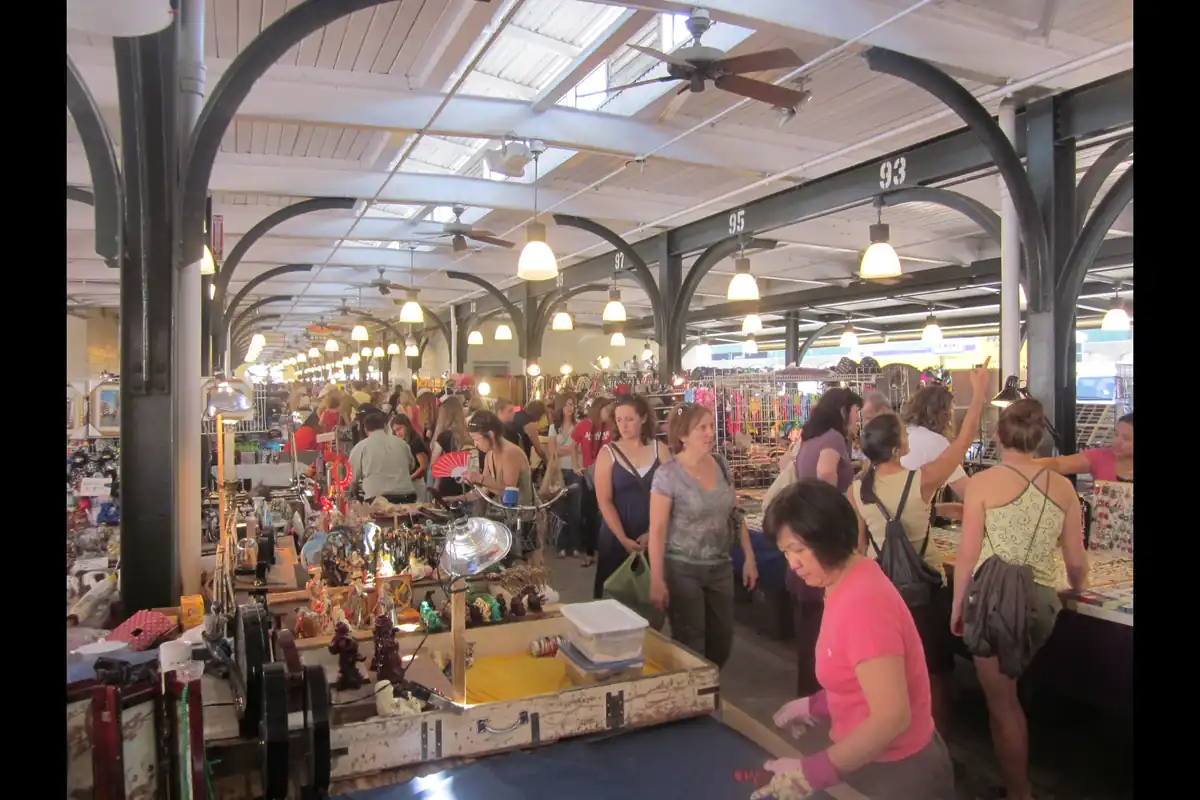
Featured image: French Market flea stall, New Orleans. Photo by Infrogmation of New Orleans, via Wikimedia Commons (CC BY 2.0).
