


Your income was $4,200 last month. This month it might be $900 — or $0. That is the reality of freelancing, gig work, seasonal jobs and running a small business: the money arrives in waves, but the rent, the groceries and the electricity bill arrive on schedule every single month.
An emergency fund is what stops a slow month from becoming a crisis. It is a pot of cash, kept separate and easy to reach, that covers your essential expenses when income dips or an unexpected bill lands. This guide shows you how to build one on an irregular income — how much you need, where to keep it, and the simple percentage system that works even when no two paydays look alike. If you start freelancing or already earn this way, this is the safety net that makes the whole lifestyle sustainable.
What an Emergency Fund Is (and What It Is Not)
An emergency fund is cash set aside for genuine emergencies only: a lost client, a dry month with no work, an urgent medical bill, or a repair you cannot work without. It is not a holiday fund, not a deposit for a new laptop, and not an investment account.
Three rules decide whether money belongs in the fund:
- Accessible fast — you can reach it within a day or two, without selling anything or paying a penalty.
- Safe — its value does not fall when markets do. It sits in cash, not in stocks or crypto.
- Separate — it lives in its own account, away from your everyday spending money and your tax money.
That last point matters more than it sounds. When your emergency money sits in the same account as your spending money, it quietly gets spent. A separate account turns the fund into a line you have to deliberately cross.
Why Irregular Income Needs a Bigger Fund
The standard advice — save three to six months of expenses — was written for salaried workers. A salaried employee usually has a notice period, employer health cover, paid sick leave and, in many countries, unemployment benefits. A freelancer or gig worker has none of those. When the work stops, the income stops the same day.
The numbers show how thin most people’s cushion is. The US Federal Reserve’s Survey of Household Economics found that about 37% of adults could not cover a $400 emergency expense entirely with cash, and Bankrate’s 2024 survey found 56% of Americans did not have $1,000 in savings for an emergency. For someone whose income already swings month to month, that gap is far riskier — a quiet month and a broken laptop in the same week can force expensive borrowing.
That is why the standard target shifts up for variable earners. Most financial planners recommend six to twelve months of essential expenses for freelancers and the self-employed, against three to six months for a steady salary. Avoiding the common money mistakes beginners make — like treating a good month as your normal income — is half the battle.
How Much Emergency Fund Do You Actually Need?
Size the fund from your essential expenses, not your income. Income is the thing that disappears; essentials are the thing that does not. Essential means you would still pay it if no money came in for a month: rent or mortgage, utilities, groceries, insurance, minimum debt payments, transport you need for work, and childcare you cannot drop.
| Your situation | Recommended cover | Why |
|---|---|---|
| Steady salary, two incomes at home | 3 months | Predictable pay, a second earner as backup |
| Single income, steady salary | 6 months | One paycheque carries the household |
| Freelancer with several steady clients | 6 months | Losing one client does not wipe out income |
| Freelancer, 2–4 clients or seasonal work | 9 months | A lost client or a slow season creates a real gap |
| 1–2 clients, gig work, or new freelancer | 12 months | Income can drop sharply with little warning |
| Single earner with dependants | 9–12 months | More people depend on your variable income |
The formula is simple: emergency fund target = monthly essential expenses × months of cover.
| Monthly essentials | 6 months | 9 months | 12 months |
|---|---|---|---|
| $1,500 / £1,200 / €1,400 | $9,000 | $13,500 | $18,000 |
| $2,500 / £2,000 / €2,300 | $15,000 | $22,500 | $30,000 |
| $4,000 / £3,200 / €3,700 | $24,000 | $36,000 | $48,000 |
If twelve months looks impossible, that is normal — almost nobody builds the full fund in one go. You build it in stages, and every stage makes you meaningfully safer than the last.
Step 1: Find Your Real Essential Monthly Number
Open your bank statements for the last three months and list every outgoing. Mark each one essential or optional. Be honest: streaming subscriptions, takeaways and new clothes are optional, even if they feel routine. Use your highest essential month, not the average, so the number is safe.
| Expense | Essential? | Typical monthly cost |
|---|---|---|
| Rent or mortgage | Yes | Your largest fixed cost |
| Utilities, phone, internet | Yes | Needed to live and work |
| Groceries | Yes | Home cooking, not eating out |
| Insurance (health, home, vehicle) | Yes | Premiums you must keep paying |
| Minimum debt payments | Yes | Minimums only — extra payments can wait |
| Transport for work | Yes | Fuel, fares, or vehicle costs |
| Business costs (software, hosting) | Yes | Tools you need to keep earning |
| Eating out, streaming, hobbies | No | Cut first in a crisis |
Add up the essentials only. That single number is the foundation of everything that follows — your target, your milestones, and your monthly saving rule all come from it.
Step 2: Set Milestones, Not Just a Final Target
A $25,000 target paralyses people. A $1,000 target gets them started. Break the journey into milestones and celebrate each one — small wins keep you going through the slow months.
| Milestone | What it covers | Why it matters |
|---|---|---|
| $1,000 (or £800 / €900) | A car repair, a medical bill, a quiet fortnight | Stops small shocks becoming credit-card debt |
| 1 month of essentials | One full month with zero income | You can breathe and think instead of panicking |
| 3 months of essentials | A lost client or a slow quarter | Time to replace income without desperation |
| 6 months of essentials | A serious income drought | The standard freelancer floor |
| Full target (9–12 months) | A worst-case year | Real financial independence from month-to-month fear |
Work on one milestone at a time. When you hit $1,000, the next goal is one month of essentials — not the full twelve. The fund grows the same way your income arrives: unevenly, in bursts, and faster than you expect once the habit sticks.
Step 3: Pay Yourself a Salary
The fixed-monthly-transfer advice fails on irregular income because it assumes a fixed payday. The fix is to flip it around: give yourself a steady “salary” from lumpy income, and save from the surplus.
Look at your last 12 months of earnings and find three numbers:
- Baseline income: your lowest normal month — the amount you can reasonably count on.
- Average income: your typical month across the last six to twelve months.
- Surplus income: anything above baseline in a good month.
Base your everyday spending on your baseline income, not your best month. Pay yourself that baseline amount into your spending account each month, as if it were a salary. Everything above it is surplus — and surplus is where your emergency fund comes from. A freelance income calculator can help you work out what your real average monthly income is after tax and expenses, so your baseline is a number you can trust.
If your income is so new or so seasonal that you have no baseline yet, use your three lowest-earning months from the past year or two as a starting point, and revise the figure every quarter as your history grows.
Step 4: Split Every Payment the Day It Arrives
Do not wait until the end of the month to save what is left — on irregular income, there is rarely anything left. Instead, split every payment the day it lands, before you spend a cent of it. A percentage rule adapts automatically: a big payment saves a lot, a small payment saves a little, and a zero month costs you nothing.
| Bucket | Suggested share of each payment | Notes |
|---|---|---|
| Tax reserve | 25–30% (check your local rate) | Separate account — this money is already owed, never touch it for emergencies |
| Emergency fund | 15–20% until the target is reached | Drop to 5–10% for top-ups once the fund is full |
| Business costs | 5–10% | Software, hosting, tools you need to keep working |
| Living expenses (your “salary”) | The rest | Capped at your baseline monthly amount |
On a $3,000 payment, 15% is $450 into the fund. On a $7,000 month, it is $1,050. The percentages do the thinking for you, and automating the transfers — a standing instruction or an automatic sweep the day a payment clears — removes willpower from the equation entirely. Charging enough to make this work matters too: if every payment barely covers your bills, review your rates with a freelance pricing guide before blaming your discipline.
Step 5: Where to Keep the Fund
Where the money sits matters almost as much as how much there is. It needs to be reachable in a day or two, safe from market swings, and ideally earning something rather than sitting idle.
| Where to keep it | Access | Risk | Verdict |
|---|---|---|---|
| High-yield savings account | Same day to 1–2 days | Very low | Best home for the bulk of the fund |
| Regular savings account | Instant | Very low | Good for the first $1,000–$2,000 layer |
| Money market account | 1–2 days | Very low | A solid alternative where available |
| Cash at home | Instant | Theft, fire, no interest | Only a small amount for immediate needs |
| Stocks, crypto, or gold | Days, and value swings | High | Never — an emergency fund is not an investment |
A practical setup is two layers: a regular savings account holding roughly one month of essentials for instant access, and a high-yield savings account holding the rest. High-yield accounts have been paying roughly 4–5% in recent years in the US and comparable rates elsewhere — on a $20,000 fund, that is $800–$1,000 a year in interest, for money that just sits there waiting. Do not be tempted to chase higher returns by investing the fund: if you need it during a market dip, you would be selling at a loss, and the whole point of the fund is that it is there in full, exactly when you need it. That is also why it should never be parked in crypto — if you want to learn about digital assets, read our cryptocurrency for beginners guide separately, with money you can afford to risk.
Step 6: Use Windfalls and Good Months First
Irregular income has an upside: the good months. A big project payment, a bonus, a tax refund, or a sold item can move your fund forward by months in a single day — but only if the money goes to the fund before lifestyle spending absorbs it.
Make it a rule: windfalls go to the fund first, until your current milestone is met. If your average invoice is $2,000 and a client pays $8,000 for a bigger project, the extra $6,000 is an opportunity, not a shopping trip. The same applies to smaller top-ups: a quiet weekend spent on reselling for profit can turn unused items into a few hundred dollars straight into the fund.
The same logic works in reverse during bad months. When income dips below baseline, draw your “salary” from the smoothing buffer you built in good months — not from the emergency fund. The emergency fund is for genuine emergencies, not for topping up a slow month. Keeping a small separate smoothing buffer (even one month of baseline income) between your business account and your spending account makes this easy.
What Counts as an Emergency?
A fund only works if you are strict about what it is for. Before you withdraw, ask: is this unexpected, urgent, and essential?
| Use the fund | Do not use the fund |
|---|---|
| Losing a major client or income source | A holiday or a sale you want to catch |
| Urgent medical costs not covered by insurance | A new phone, laptop or gadget (unless yours breaks and you need it to work) |
| Essential home or vehicle repair you need for work | Christmas presents or a wedding |
| Emergency family travel | Investing, or “a great opportunity” |
| Covering essentials during a no-income month | Paying off a loan early (unless it is high-interest — see below) |
If the answer to all three questions is yes, use the fund without guilt — that is literally what it is for. Then make rebuilding it your first financial priority.
Emergency Fund or Pay Off Debt First?
This is the most common dilemma, and the answer is: do both, in sequence.
- Build a starter buffer first — about one month of essentials (or $1,000 if that is sooner). Without it, every small shock goes on a credit card at high interest.
- Attack high-interest debt aggressively — credit cards and payday loans first, paying more than the minimum while your starter buffer holds the line.
- Then complete the full emergency fund — once expensive debt is gone, redirect those payments into the fund until you hit your full target.
Low-interest debt, like a modest mortgage or a student loan on a fixed low rate, can wait until after the fund is complete. The sequence matters because debt at 20%+ interest is itself an emergency — it just arrives on a schedule.
Rebuilding After You Use the Fund
Using your emergency fund is not failure; it is the fund doing its job. But a half-empty fund is a risk, so rebuild it deliberately:
- Restart the percentage split immediately — the same 15–20% of every payment, from the next payment onward.
- Temporarily raise the percentage in good months — 25% or even 30% until you are back to your previous milestone.
- Direct windfalls there first again, until the milestone is restored.
- Review what happened — was it a one-off, or a sign your income is too concentrated in one client? If one client is more than half your income, diversifying is part of the rebuild.
Most people who have used their fund once never let it stay empty again. The peace of mind it bought is the best advertisement for refilling it.
Pros and Cons of a Large Emergency Fund
Aiming for nine to twelve months sounds cautious, and it has trade-offs worth knowing about.
Pros: you can turn down bad clients and low-paying work; a dry spell becomes an inconvenience, not a crisis; you sleep better; you can take a calculated risk, like investing in a new skill or a bigger project, from a position of strength.
Cons: large cash balances earn less than investments over the long term, so money parked beyond your target has an opportunity cost; a very large fund can also breed complacency about growing income. The fix is simple: once the fund is full, redirect the percentage split into investing or debt repayment instead of letting cash pile up indefinitely.
Common Mistakes to Avoid
- Sizing from income, not expenses. A $6,000 month does not mean you need $36,000 — your expenses decide the target.
- Mixing the fund with tax money. Your tax reserve is money you already owe; raiding it for an emergency creates a second emergency at tax time.
- Setting a fixed monthly amount. It fails in the first quiet month. Percentages adapt; fixed sums do not.
- Keeping it in the spending account. If you can see it every time you check your balance, you will spend it.
- Investing it for higher returns. The fund’s job is stability, not growth — that is what your other accounts are for.
- Waiting for a “good time” to start. There is no good time on irregular income. Start with $50 from the next payment; the habit matters more than the amount.
Frequently Asked Questions
How much emergency fund do I need if my income is irregular?
Most freelancers and self-employed workers should aim for six to twelve months of essential expenses — roughly double the three-to-six-month guideline for salaried workers. Use six months if you have several steady clients, nine if your income is seasonal or concentrated, and twelve if you are a single earner, a new freelancer, or depend on one or two clients.
How do I save when my income changes every month?
Save a percentage of every payment the day it arrives — typically 15–20% into the emergency fund — instead of a fixed amount on a fixed date. In a $3,000 month that is $450; in a $7,000 month it is $1,050; in a zero month it costs you nothing. Pay yourself a steady baseline “salary” and let the surplus do the saving.
Where should I keep my emergency fund?
In a high-yield savings account for the bulk of it, with around one month of essentials in a regular savings account for instant access. Keep it out of stocks, crypto and other investments, where its value can fall exactly when you need it most.
Should I pay off debt before building an emergency fund?
Build a small starter buffer first — about $1,000 or one month of essentials — then attack high-interest debt aggressively, then finish the full fund. The starter buffer stops new emergencies from going on a credit card while you clear the old debt.
What if I have to use my emergency fund?
Use it — that is what it is for. Then rebuild it as your first priority: restart the percentage split on the next payment, temporarily raise it in good months, and send windfalls there first until you are back to your previous milestone.
The Bottom Line
Building an emergency fund on an irregular income is not about discipline or willpower — it is about building a system that works with lumpy income instead of against it. Find your essential monthly number, pick a target of six to twelve months, break it into milestones, pay yourself a steady salary, and split a percentage of every payment the day it arrives. Start with $1,000, then one month, then three. Each milestone buys you something no paycheque can: time, options, and the freedom to say no to work that does not pay what you are worth.
If you are still building the income itself, our earning ideas hub is a good place to find your next stream — and once it is flowing, this fund is what keeps it flowing safely.
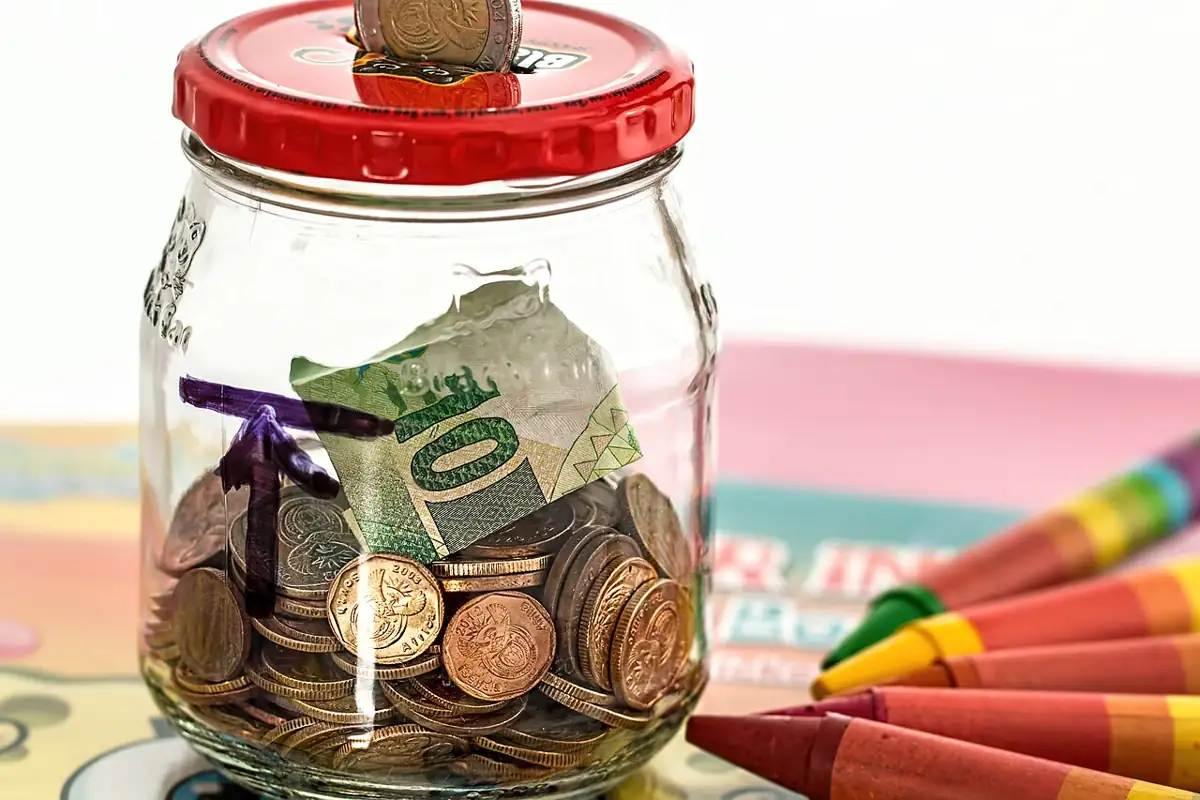
Featured image: Photo by stevepb on Pixabay (CC0, free to use). This article is general information, not personal financial advice. Rates, rules and tax treatment vary by country and change over time — consider speaking to a qualified adviser about your own situation.
