


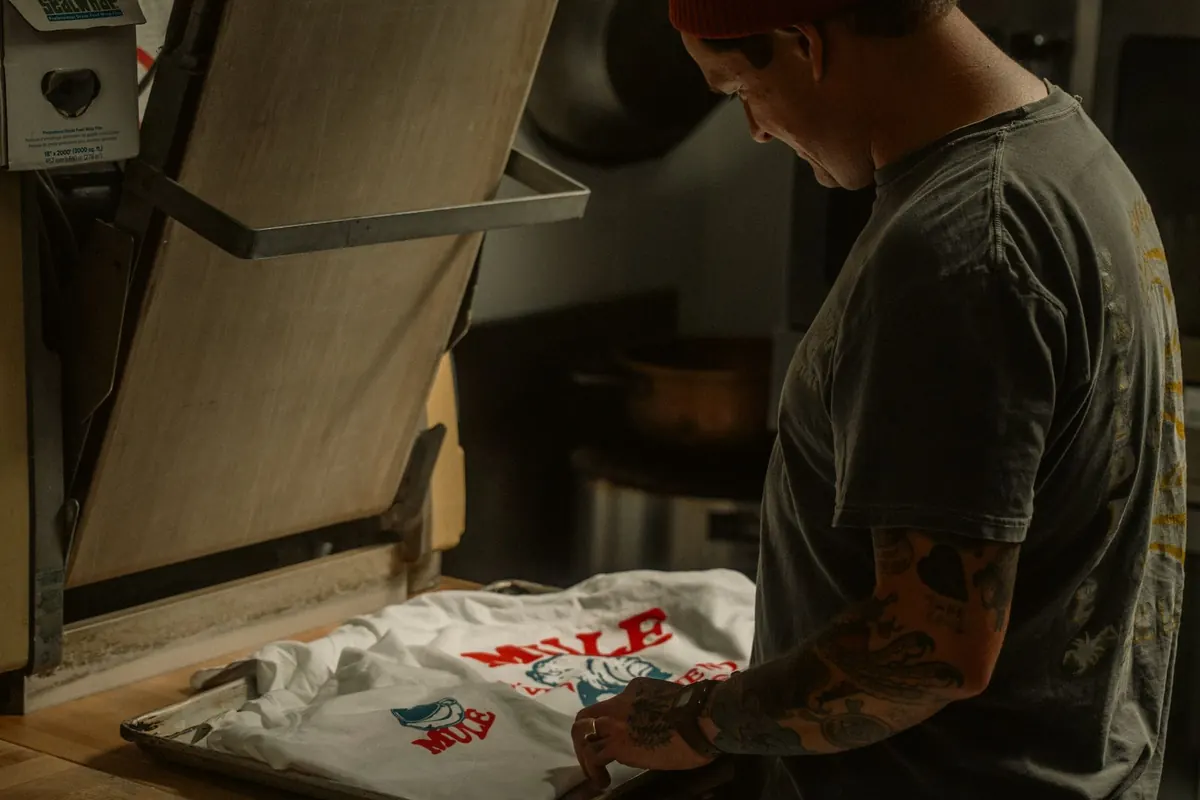
Imagine selling a t-shirt, a mug, or a poster without ever buying one in advance, storing a box of stock in your spare room, or queuing at the post office. That is the promise of print on demand — and it is also the reason so many beginners are drawn to it. The catch, which most hype-filled videos skip, is that print on demand is not a money machine. It is a design-and-search business: you win by finding buyers who already want a specific product, and giving them a design that speaks directly to them.
This guide explains print on demand for beginners in plain terms: how it actually works, what it really costs, which platforms suit a first-timer, how to price for a profit, and the mistakes that sink most new sellers in their first month. No inventory, no guesswork about warehouses — just a realistic path from your first design to your first sale.
What Is Print on Demand?
Print on demand (POD) is a fulfilment model where a product is only made after a customer orders it. You create a design and list it on a product — a t-shirt, hoodie, mug, tote bag, poster, or phone case. When someone buys, a print provider prints your design onto that product, packs it, and ships it directly to the buyer. You never touch the item.
Your earnings are the difference between the retail price you set and the provider’s base cost plus fees. On a marketplace such as Redbubble or TeePublic, the platform sets much of the pricing and pays you a royalty or margin per sale. On your own store — for example, Etsy connected to Printful or Printify, or a Shopify store — you set the retail price yourself and keep whatever remains after production, shipping, and platform fees.
That distinction matters more than any other choice you will make. Marketplaces bring built-in shoppers but pay less per sale; your own store pays more per sale but brings zero shoppers until you do the marketing. Most beginners do best starting where buyers already search, then moving their proven designs to their own store later. As one of several passive income ideas, POD sits firmly in the “slow build” camp: the work is front-loaded, and income grows as your catalogue grows.
How Print on Demand Works, Step by Step
The whole chain has just four hops, and understanding them explains both the appeal and the limits of the model:
- You design. You upload artwork — often simple text, a graphic, or a combination — and place it on a product using the platform’s mockup tool.
- You list. You publish the product with a title, description, and tags that match what buyers actually type into search.
- The buyer orders. The customer pays your retail price at checkout.
- The provider fulfils. The print partner prints, packs, and ships the item. You are paid your margin or royalty, usually on the platform’s payout schedule rather than instantly.
Because nothing is printed before it is sold, your financial risk is close to zero. The risk that replaces it is time: a design that nobody finds earns nothing, however good it looks. That is why search and niche research come before design, not after.
Pick a Niche Before You Pick a Product
The single biggest beginner mistake is designing for “everyone.” A shirt that says “Funny T-Shirt” competes with millions of listings. A shirt made for night-shift nurses, disc golfers, or French bulldog owners competes with a handful — and speaks to a buyer who recognises themselves in it instantly.
A workable niche passes three simple tests. First, people search for it with buying intent: phrases like “funny nurse shirt” or “camping mug for dad” show up in marketplace search suggestions and have listings with reviews, which is proof that sales happen. Second, you can name ten different design ideas for it without repeating the same joke — if you run dry at three, the niche is too thin. Third, the buyer belongs to a group you can reach: a profession, a hobby, a sports team, or a life stage, rather than a vague personality trait.
Validate before you invest hours. Search your niche phrase on Etsy, Amazon, and Redbubble. If there are no results at all, there may be no demand. If there are thousands of near-identical listings with strong reviews, the niche is crowded — look for a smaller corner of it, such as a specific breed, job role, or occasion, rather than abandoning the idea entirely. Steady demand plus weak listings — blurry mockups, three-word titles, no reviews — is your opening.
One hard rule protects your whole account: never copy another seller’s design, lift trademarked phrases, band names, or cartoon characters, or reuse a famous slogan. Platforms suspend accounts for intellectual-property violations, and a takedown can wipe out months of work. Original wording, your own artwork, and licensed elements only — the same discipline that applies to selling digital products applies here, with higher stakes, because a physical product carries your name on it.
The Best Products to Start With
Start with one or two products, not twenty. Depth beats breadth when you are learning: one product means one set of print specifications, one mockup style, and one pricing calculation to master. T-shirts, hoodies, mugs, and stickers remain the consistent best-sellers across platforms, with premium and oversized apparel and eco-friendly materials trending in 2026.
| Product | Why beginners like it | Watch out for |
|---|---|---|
| T-shirts | Largest buyer demand; easy to design for | Most competitive category of all |
| Hoodies and sweatshirts | Higher retail price, so more profit per sale | Higher base cost; sizing returns are more common |
| Mugs | Strong gift market; simple designs work well | Breakage in shipping; keep packaging expectations realistic |
| Posters and wall art | Great for illustration-led designs | Needs high-resolution artwork to print sharply |
| Stickers | Low price point encourages impulse buys | Small profit per unit; volume matters |
| Tote bags | Popular with eco-conscious and bookish niches | Print area and fabric colour limit some designs |
Print on Demand Platforms Compared
There are two structurally different routes, and beginners often confuse them. Marketplace platforms host your designs inside a store that already has traffic. Fulfilment platforms plug into a store you run yourself. Here is how the main options compare:
| Platform | Route | Best for beginners who… | Typical earnings pattern |
|---|---|---|---|
| Redbubble | Marketplace | Want built-in traffic and 70+ product types per design | Lower margin per sale; you set a markup above the base price |
| TeePublic | Marketplace | Want a simple upload flow for apparel-led designs | Flat artist earnings per item, often a few dollars per shirt |
| Merch by Amazon | Marketplace | Can get accepted and want Amazon’s shopper traffic | Royalty per sale; tiered limits rise as you sell |
| Printful | Fulfilment (Etsy/Shopify) | Value consistent in-house quality and branding options | You set the price; typical margins around 30–50% after costs |
| Printify | Fulfilment (Etsy/Shopify) | Want the lowest base costs via competing print providers | You set the price; a paid plan (around $29/month) cuts base costs further |
Printful and Printify are both free to join on their base tiers, and both now sit under the same parent company — but they still run as separate services with different strengths. Printful manufactures in-house, so quality is more consistent; Printify routes orders to a network of providers, so base costs are typically lower but quality can vary by provider. Order a sample from whichever provider you choose before you sell: a $20–$30 sample (roughly £15–£23 or €18–€26, depending on the exchange rate) is the cheapest insurance against bad reviews.
A sensible beginner path is to start on one marketplace, learn what sells, and then open an Etsy shop connected to Printful or Printify for your proven designs. That way you are buying data with someone else’s traffic first, instead of paying for ads to test unproven ideas. If you are still weighing which income stream fits you, the Side Hustle Matcher can help you compare POD against other options before you commit weeks to it.
What Does Print on Demand Actually Cost?
You can genuinely launch for under $100, and most of that is optional. There is no inventory bill, and fulfilment platforms charge nothing until a customer orders. Your real upfront costs are a sample order, any design-tool subscription, and — if you open your own store — a shop or platform fee.
| Cost | Typical range | Notes |
|---|---|---|
| Marketplace accounts (Redbubble, TeePublic) | Free | No monthly fee; you earn a margin or royalty per sale |
| Printful / Printify base tiers | Free | You pay only the base cost per order |
| Printify Premium / Printful Growth | About $25–$30/month | Only worth it once sales volume justifies the discount |
| Etsy listing fee | Small flat fee per listing | Plus a transaction fee and payment-processing fee per sale |
| Sample order | About $20–$60 | Strongly recommended; check print quality and sizing first |
| Design tool (Canva free tier, etc.) | $0 to start | Free tools cover most beginner designs |
Pricing for a Real Profit
Price from your full costs, not from what feels cheap. A common beginner error is pricing a shirt at $19.99 because it “looks competitive,” then discovering the base cost, shipping, and fees leave almost nothing. Work backwards instead: retail price minus base cost, minus shipping charged to you, minus marketplace and payment fees, equals your profit. If that number is under about 20% of the retail price, raise the price or pick a cheaper base product.
Here is a realistic example for a t-shirt sold through a fulfilment platform on your own store at $28 (about £21 or €24):
| Line item | Amount |
|---|---|
| Retail price | $28.00 |
| Base cost + shipping | −$16.50 |
| Payment processing (approx.) | −$1.10 |
| Your profit | About $10.40 (roughly 37%) |
Marketplace royalties are thinner — a few dollars per shirt is normal — which is why marketplace sellers need volume: many designs, each earning a little, adding up over time. Neither route makes you rich on ten designs. Both reward a catalogue built steadily over months.
Your First 30 Days: A Simple Launch Plan
- Days 1–3: Choose one niche and validate it. Run the three tests above. Pick one audience you can name ten designs for.
- Days 4–7: Create your first batch. Aim for 10–20 designs in that single niche, not one design in ten niches. Simple, readable designs outperform complicated artwork for most beginners — bold text and one clear graphic beat a cluttered illustration.
- Days 8–10: Set up one platform properly. Upload with keyword-rich titles, a plain-language description, and all relevant tags. Titles should read like what a buyer types: niche + product + occasion, for example “Funny Night Shift Nurse T-Shirt, Gift for Nurses.”
- Days 11–14: Order a sample. Check the print sharpness, colours on dark fabric, and the true fit. Fix anything that looks washed out or blurry before strangers pay for it.
- Days 15–30: Publish steadily and watch the data. Add designs in small batches, note which niches and phrases get views and favourites, and make more of what gets attention. Expect your first sale in roughly two to six weeks, not two days.
Designs When You Are Not an Artist
Most best-selling POD designs are not fine art. They are clean typography, a short phrase that resonates with a specific group, and at most one simple graphic. Free tools such as Canva cover this comfortably, and many sellers start there before ever touching professional software. If you use AI image tools, check each platform’s disclosure rules — some marketplaces require AI-assisted content to be declared — and never present someone else’s artwork as your own.
Whatever tool you use, export at print resolution: around 300 dots per inch at the full print size, typically a PNG file at least 2,000 pixels wide for a large shirt print, with a transparent background for artwork that is not a full rectangle. A screenshot, a social-media download, or a low-resolution web image will print soft and blurry, and buyers notice. Always preview your design on the actual shirt colour you are selling — dark text vanishes on a dark shirt, and pale colours wash out on white.
Pros and Cons of Print on Demand
Pros
- No inventory, no warehouse, and no upfront stock costs.
- Easy to test new niches: a failed design costs hours, not hundreds of dollars.
- Providers handle printing, packing, shipping, and (on marketplaces) returns.
- One design can be sold on many products and platforms.
- Work fits around a job: design in batches, list when you have time.
Cons
- Thin margins, especially on marketplaces — volume is required.
- Little control over shipping speed, packaging, or print quality on marketplaces.
- Fierce competition in broad niches; search visibility takes time to build.
- Returns and quality complaints still reach you, even though you never handled the item.
- Income is uneven and seasonal — gift occasions spike, quiet months dip.
7 Mistakes Beginners Should Avoid
- Designing before researching. If nobody searches for it, nobody buys it, however clever the joke.
- Copying top sellers. Same phrase, same layout, same font puts you in direct competition with listings that already rank — and risks an IP takedown.
- Spreading across ten niches at once. You cannot learn what works if every design targets a different audience.
- Skipping the sample order. Colours shift on fabric, and sizing surprises are the fastest route to one-star reviews.
- Weak titles and tags. A design that cannot be found cannot sell. Put the niche, the audience, and the occasion in the title.
- Quitting at 30 designs. POD is a catalogue game. Most sellers who quit do so before they have enough listings to gather useful data.
- Pricing by guesswork. Always subtract base cost, shipping, and fees first. A sale that loses money is worse than no sale.
How to Get Your First Sales
On a marketplace, search is your marketing: titles, tags, and descriptions do the heavy lifting, so study the wording top listings use and adapt the pattern (not the copy) to your own designs. On your own store, you need a traffic plan from day one — a niche social account, short videos showing the product, or content that answers the questions your buyers search for. Paid ads rarely make sense until a design has already proven it converts organically; paying to send traffic to an untested listing usually just burns money faster.
Gift occasions are POD’s reliable engine: Mother’s Day, Father’s Day, Christmas, graduations, and job-specific appreciation weeks all drive searches for personalised-feeling gifts. Plan designs six to eight weeks ahead of the occasion, because listings need time to be indexed and found. And keep your store honest: if a design is AI-assisted, say so where the platform requires it; if a colour looks different in person, show a real mockup rather than an idealised render.
For a broader view of how POD compares with other beginner-friendly routes, see our guide to make money online for beginners, which puts marketplace selling, freelancing, and digital products side by side.
Is Print on Demand Really Passive Income?
Honestly: only partly, and only later. The early months are active work — researching, designing, listing, and learning. Once a catalogue of several hundred designs in proven niches exists, older listings can keep selling with little attention, and that is where the “passive” feeling comes from. But niches fade, trends move on, and platforms change their rules, so a catalogue left entirely alone slowly decays. Treat POD as semi-passive income that rewards maintenance: a few hours a month refreshing tags, retiring dead designs, and adding new ones keeps the engine running.
Realistic expectations help here. A common pattern reported by beginner guides is $0–$20 a month in the first couple of months with 50–100 designs, growing to a few hundred dollars a month only after a year or more of steady catalog building — and many sellers never get past the first stage because they stop. If you enjoy the design and research process itself, you are far more likely to survive the quiet start than if you only want the payout.
Frequently Asked Questions
Do I need money to start print on demand?
No. Marketplace accounts and fulfilment base tiers are free, and providers charge only after a customer orders. A realistic starting budget under $100 covers a sample order and, optionally, a design-tool subscription — everything else is your time.
Do I need to be good at design?
Not in the traditional sense. Simple, readable designs with a phrase that resonates with a specific audience outsell complicated artwork more often than beginners expect. Free tools, good typography, and a clean mockup matter more than illustration skill.
How long until my first sale?
Plan on two to six weeks if you list steadily in a validated niche, and several months before income looks meaningful. Listings need time to be indexed, and buyers need to find you through search before they can buy.
Printful or Printify — which should a beginner choose?
Choose Printify if keeping base costs low matters most and you are happy vetting providers; choose Printful if consistent quality and polished branding matter more and you can accept slightly higher base costs. Both are free to start, so testing one with a sample order is cheap.
Can I sell the same design on multiple platforms?
Yes, in most cases — your design is yours, and cross-listing the same artwork on a marketplace and your own store is standard practice. Check each platform’s exclusivity terms first, and keep your titles and tags tailored to each marketplace’s search habits rather than copying them verbatim.
The Bottom Line
Print on demand is one of the lowest-risk ways to start selling online, precisely because you hold no inventory — but low risk is not the same as easy money. Pick one narrow niche, validate it with real search evidence, start with one or two products, price from your full costs, and give yourself a catalogue of dozens of designs before judging the results. Do that consistently for a few months, and POD becomes what it genuinely can be: a flexible, low-overhead income stream that grows with the work you put into it.
If POD sounds like your kind of side hustle, start this week with the 30-day plan above — one niche, one platform, twenty designs — and let the data tell you what to make next. For more ideas in the same spirit, browse the earning ideas hub or see how AI tools are changing freelance selling in our guide to AI side hustles.
Featured image: Photo by James Collington on Pexels (free to use).
